
Wired cameras are the better choice for a permanent system. Wifi and battery cameras have their place, mainly in rentals and spots no cable can reach, but they are often sold for jobs they do poorly.
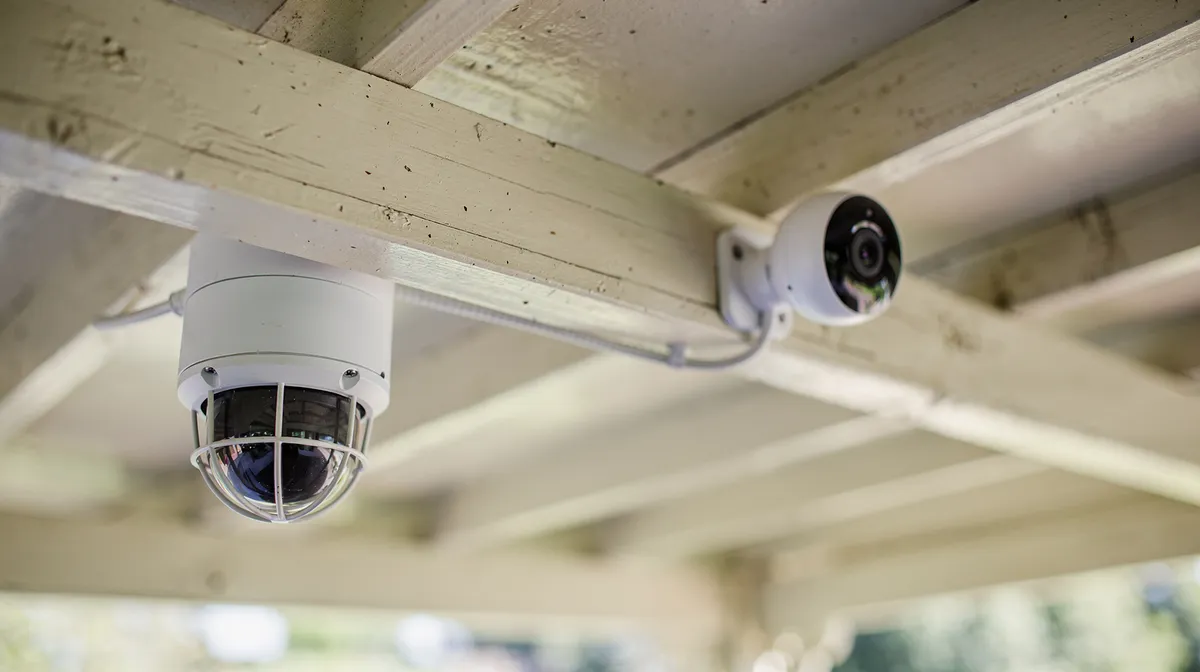
There are three kinds of camera in this discussion, not two. Wired cameras take power and video through one Cat6 cable from the recorder. Wifi cameras send video over your home network but plug into a power point nearby. Battery cameras have no cable, record short clips when something moves and need recharging.
One cable does everything. Power comes down the same Cat6 as the video, so there is no plugpack to fail in the roof and no separate supply to find. The camera can record non-stop at full quality, because it is not saving battery or competing for wifi.
That matters in the inner city. Apartment buildings and terraces are full of neighbouring wifi networks, and a crowded wireless band is the first thing to cause dropouts. A wired camera ignores all of that and keeps recording when the internet is down.
The cost is the installation, since running cable through a roof or under a floor takes time. It is also the part that lasts fifteen years or more.
Close to the router, wifi cameras work as promised. Outside a brick, rendered or concrete building, the signal weakens fast, and the far side of the house often has the worst reception. A camera on a weak signal drops frames and freezes at the moment you need it.
Then there is power. Most wifi cameras need a plugpack, so without an outdoor power point right where the camera goes, an electrician has to add one. By then a wired camera often costs about the same and works better.
They go up in minutes almost anywhere, with no cable and hardly any holes. That suits renters, temporary setups and spots where no cable can run.
They do not record all the time. Each one sleeps until movement wakes it, which takes a second or two, so the clip often starts with someone already halfway across the frame.
Battery life on the box assumes a quiet spot. Facing a footpath with people walking past all day, the camera wakes constantly and the battery lasts weeks rather than months.
A wired system saves to a drive in your home and keeps weeks of continuous footage with no subscription. You own it, and a clip can be copied to a USB stick for police.
Most wireless cameras save short clips to a cloud service, often with a monthly fee and only a week or two of storage on the cheaper plans. If the plan lapses or changes, so does your footage.
Constant power lets a wired camera run bright infrared, a colour low light sensor or a light that switches on when a person appears. Battery cameras keep their infrared weak to save charge, so they see less far at night than the specifications suggest.
The jobs where we suggest wireless are usually partial ones: wired cameras on the four or five positions that matter, and a battery camera where a cable would mean lifting roof sheets or crossing a concrete slab.
If you rent, a battery camera may be the only practical choice. Pick one that records to a memory card as well as the cloud, and know its limits before you rely on it.
Prices for a wired system are in our installation cost guide, and our guide to how many cameras you need helps you plan the positions first.
Mostly not. The video goes over wifi, but most wifi cameras still need a power point. Only battery cameras have no cable at all, and they record less to save power.
The months on the box assume very little movement. Facing a busy street or footpath, a charge may last a few weeks.
Cameras that save to a memory card or a recorder keep recording. Cloud only cameras stop until the connection returns.
Yes, and that is often the best answer: wired where it matters, and a battery camera for the one spot a cable cannot reach.
Installed prices, what pushes a quote up, and what a very cheap quote usually leaves out.
PlanningHow to count the ways onto your property and turn that into a camera number.
QueenslandWhat Queensland law allows for homes, apartments and businesses, in plain English. Not legal advice.
HiringThe licences to ask for, what a full quote lists, and the warning signs.
Buying adviceHow the three brands we fit most compare, and which specifications actually change your footage.
Four camera 4K home systems from $1,690 installed, planned for Queenslanders, cottages and townhouses.
CommercialCafes, shops, studios and offices, with weeks of recording and a login for each staff member.
RepairsOffline cameras, beeping recorders, broken apps and old analogue systems repaired or replaced.
DeterrenceSiren, strobe and spoken warning cameras, from $1,890 for four installed.
Cameras and cabling in East Brisbane 4169.
4006Cameras and cabling in Fortitude Valley 4006.
4171Cameras and cabling in Hawthorne 4171.
4169Cameras and cabling in Kangaroo Point 4169.
4005Cameras and cabling in New Farm 4005.
4006Cameras and cabling in Newstead 4006.
Give us a few details about the property and we will send a written, itemised quote.
Thanks. Your details are with Richard (QLD Lic #4930731, ACMA #A058225), who will look over the job and send a written, itemised price within 15 to 30 minutes during trade hours.