
A typical house needs four cameras, and a raised Queenslander on a narrow lot often needs five. The right number comes from counting the ways someone could reach your doors.
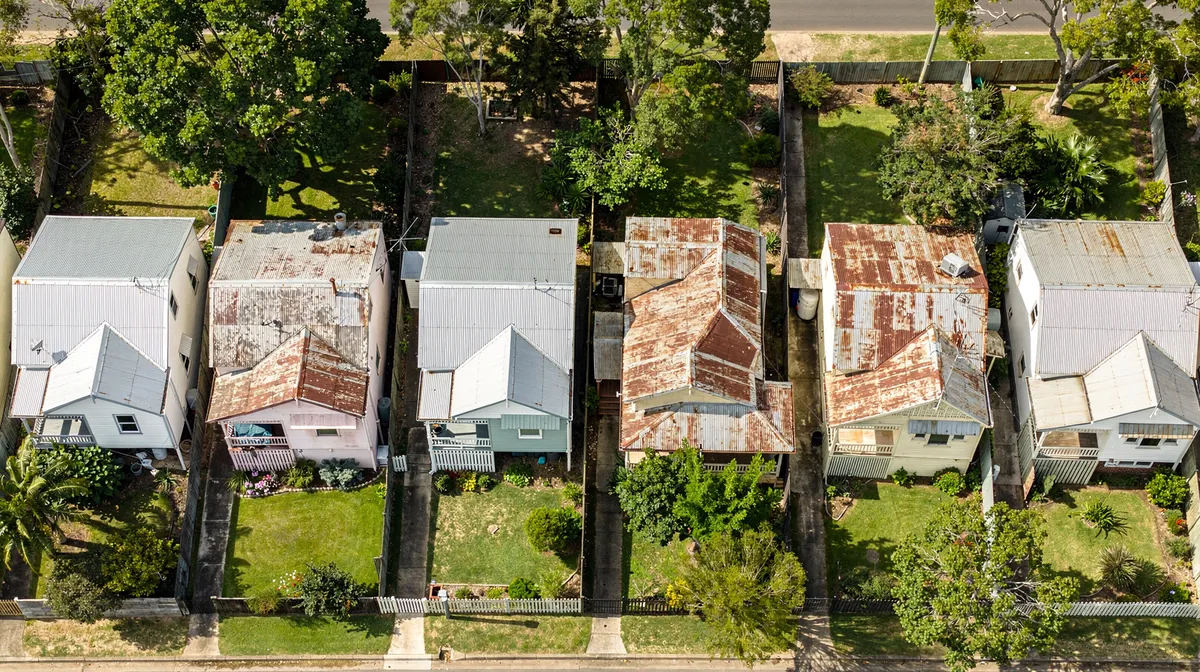
Most people choose a number first and then decide where to put the cameras. It works better in reverse: list the ways someone could get to your doors, and the number follows.
Stand at the footpath and trace every route to a door or window that does not need a climb. A typical house has four: the front gate or path, the front door, one side path and the back yard. A home with paths down both sides has five. A corner block faces two streets. A lane at the back adds another.
Each route is a camera position. You may not cover them all at once, but you should know where they are before anyone says four will do.
On most homes around New Farm, Teneriffe and Hawthorne, these do the work.
The front gate or path camera records everyone who comes in from the street, including deliveries.
The front door camera catches faces. On a Queenslander the door may be at the top of the stairs, so the camera sits under the verandah roof, angled down the steps.
The side path camera covers the way most people get to the back. It is the one installers most often leave out.
The under house or back stairs camera covers the laundry, bikes and car under a raised home, and the back door.
Together they follow how most incidents unfold: someone arrives, comes up the path, tries the front, then goes down the side.
A path down each side needs a camera on each. A back gate onto a lane needs its own camera, because lanes are quiet at night. A corner block needs a camera for each street. A granny flat or second dwelling needs one on its own door. A detached studio or shed needs a camera mounted on it, not one on the house pointing at it.
A camera has a fixed number of pixels. Spread over a wide view, a face becomes a few pixels. Narrow the view to the porch and the same face is many times larger.
So give each main entry one camera set tight for faces, and let the others take the wide view of what happened. Four cameras all set as wide as they go will record everything and identify nobody, which is the fault we see most on other installers’ systems.
Cameras mounted very high show the tops of heads. For identifying people, about two and a half to three metres works. On a raised Queenslander the verandah or eave can be much higher than that, so the camera may need to sit lower, on a post or under the stairs, to see faces.
Count the ways in to get your maximum. Choose the two routes people are most likely to use and give each a tight camera for faces. Add a camera for anything valuable kept outside, such as bikes, a car or a studio. Then pick a recorder with at least two spare channels.
Most homes land on four or five cameras. If a quote has fewer than your count, ask which route it leaves out. Prices for each size of system are in our installation cost guide.
It is a start, if it covers the main entry well enough to identify people. Put it on a recorder with spare channels and add cameras over time.
Rarely, for a family home. Outdoor cameras record people before they reach the house. Indoor cameras suit offices, empty rentals and holiday homes.
It covers the front door and nothing else, and most save clips to a paid cloud plan. It works well alongside a wired system, not in place of one.
More than your camera count. Eight channels for a four camera job costs little extra and makes adding cameras simple.
Installed prices, what pushes a quote up, and what a very cheap quote usually leaves out.
Buying adviceHow wired, wifi and battery cameras compare, and where each one makes sense.
QueenslandWhat Queensland law allows for homes, apartments and businesses, in plain English. Not legal advice.
HiringThe licences to ask for, what a full quote lists, and the warning signs.
Buying adviceHow the three brands we fit most compare, and which specifications actually change your footage.
Four camera 4K home systems from $1,690 installed, planned for Queenslanders, cottages and townhouses.
CommercialCafes, shops, studios and offices, with weeks of recording and a login for each staff member.
RepairsOffline cameras, beeping recorders, broken apps and old analogue systems repaired or replaced.
DeterrenceSiren, strobe and spoken warning cameras, from $1,890 for four installed.
Cameras and cabling in Newstead 4006.
4170Cameras and cabling in Norman Park 4170.
4000Cameras and cabling in Spring Hill 4000.
4005Cameras and cabling in Teneriffe 4005.
4171Cameras and cabling in Balmoral 4171.
4000Cameras and cabling in Brisbane City 4000.
Give us a few details about the property and we will send a written, itemised quote.
Thanks. Your details are with Richard (QLD Lic #4930731, ACMA #A058225), who will look over the job and send a written, itemised price within 15 to 30 minutes during trade hours.